ACOS
Type:
acos• Category:indicators
Description
Vector Trigonometric ACos
Parameters
| Name | Type | Description | Required | Default |
|---|---|---|---|---|
dataExp | string | Input data | no | |
real | string | Data column to apply the calculation to (e.g., closing price) | no |
Help
ACOS
Vector Trigonometric ACos
Description
The ACOS worker is an indicator used in financial analysis to calculate the inverse cosine (arccosine) of a given data series. This worker takes an input data series and applies the arccosine calculation to a specified column, typically a price column such as the closing price.
What does this worker do?
The ACOS worker calculates the arccosine of the values in the specified data column. The arccosine function returns the angle (in radians) whose cosine is the given value. In the context of financial analysis, this worker can be used to analyze and visualize trends and patterns in price movements.
How to interpret the results
The results of the ACOS worker are the arccosine values of the input data series. These values represent the angles whose cosine are the original values. In financial analysis, these angles can be used to identify trends, patterns, and correlations in the data.
Usage
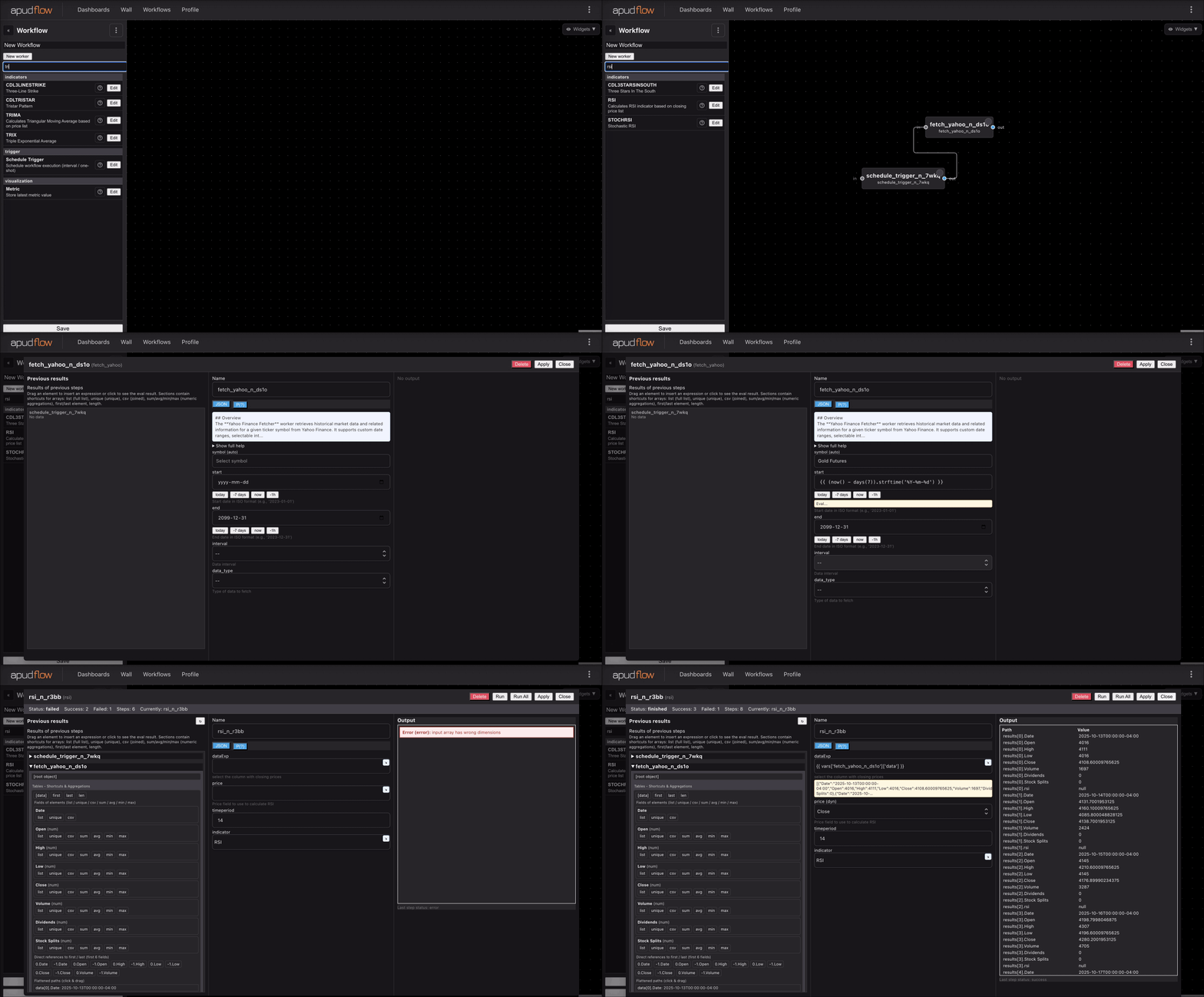
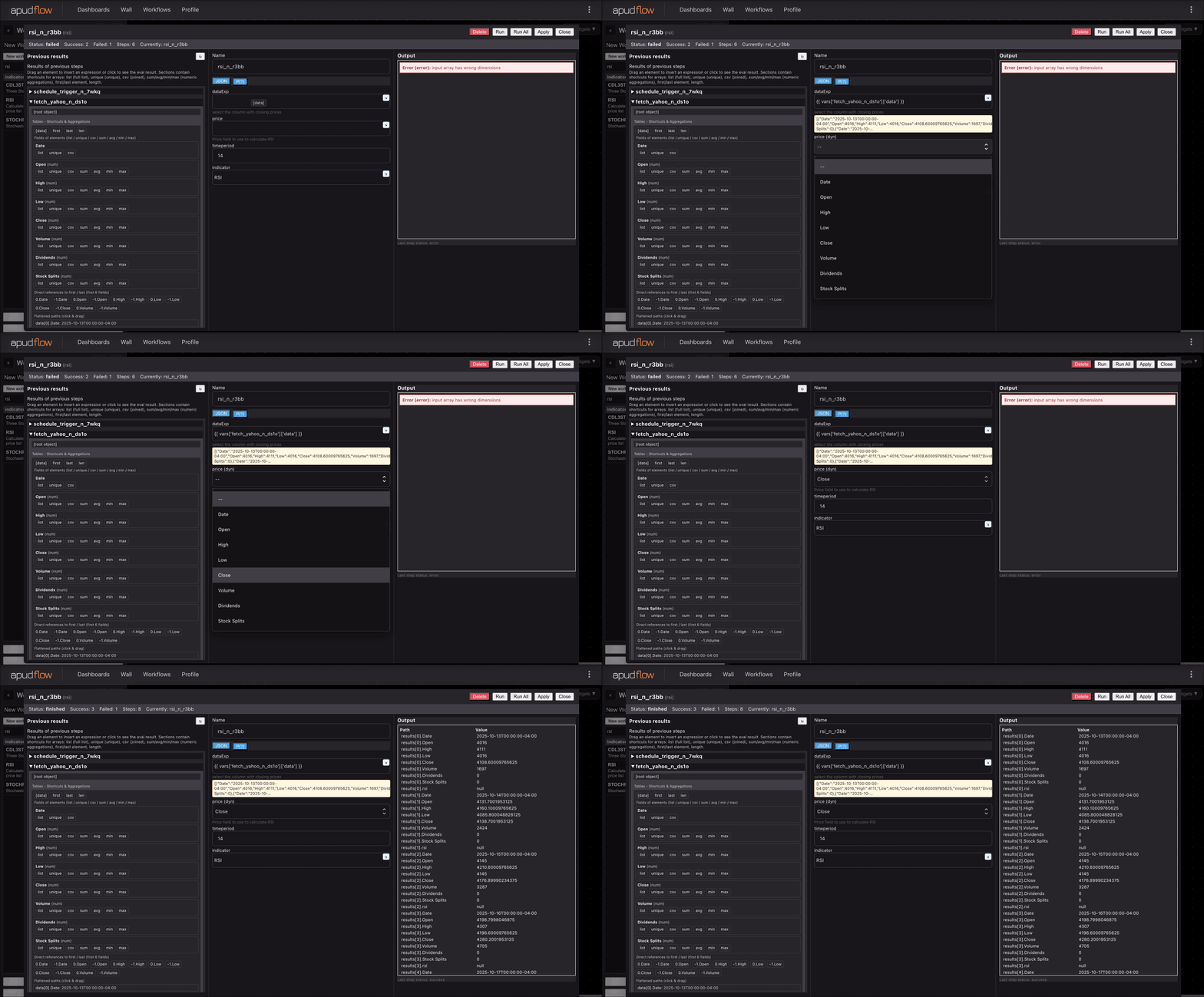
To use the ACOS worker, simply provide the input data series (dataExp) and specify the column to apply the calculation to (real). For example, to calculate the arccosine of the closing price, you would specify closing price as the real column.
Example
For a step-by-step example of how to use the ACOS worker, refer to the following GIFs:
Full Example
[](https://pub-6c7cc7f707d94ca98153d59a039b9a3d.r2.dev/indicator_full.gif)
Short Example
[](https://pub-6c7cc7f707d94ca98153d59a039b9a3d.r2.dev/indicator_short.gif)
Parameters
dataExp: Input data seriesreal: Data column to apply the calculation to (e.g., closing price)
Additional Knowledge
The arccosine function is the inverse of the cosine function. It is used to calculate the angle whose cosine is a given value. In mathematics and finance, the arccosine function has various applications, including solving trigonometric equations and analyzing periodic phenomena.
In finance, the ACOS worker can be used to analyze and visualize trends and patterns in price movements. For example, it can be used to identify cycles and correlations in financial data, which can inform investment decisions.
Note that the ACOS worker assumes that the input data series is a numeric series. If the input data series contains non-numeric values, the worker may produce incorrect or NaN (Not a Number) results.