PLUS_DI
Type:
plus_di• Category:indicators
Description
Plus Directional Indicator
Parameters
| Name | Type | Description | Required | Default |
|---|---|---|---|---|
dataExp | string | prices data | no | |
high | string | select the column with highest prices | no | |
low | string | select the column with lowest prices | no | |
close | string | select the column with closing prices | no | |
timeperiod | number | Number of periods to use for PLUS_DI calculation | no | 14 |
Help
PLUS_DI
Plus Directional Indicator
Description
The PLUS_DI worker is an indicator used in financial analysis to measure the bullish sentiment in the market. It is a component of the Directional Movement System, developed by J. Welles Wilder.
The PLUS_DI indicator measures the strength of the uptrend in a security by comparing the current high to the previous high and the current low to the previous low. It helps traders identify the bullish trend and make informed decisions.
What does this worker do?
The PLUS_DI worker calculates the Plus Directional Indicator based on the provided price data. It takes the following parameters:
dataExp: prices datahigh: select the column with highest priceslow: select the column with lowest pricesclose: select the column with closing pricestimeperiod: Number of periods to use for PLUS_DI calculation
How to interpret the results
The PLUS_DI indicator is usually plotted on a chart along with the -DI (Minus Directional Indicator). When the PLUS_DI is above the -DI, it indicates a bullish trend. Conversely, when the -DI is above the PLUS_DI, it indicates a bearish trend.
A high PLUS_DI value indicates a strong uptrend, while a low PLUS_DI value indicates a weak uptrend. Traders can use the PLUS_DI indicator to:
- Confirm the strength of an uptrend
- Identify potential buy signals when the PLUS_DI crosses above the -DI
- Adjust their trading strategies according to the bullish or bearish trend
Additional Information
The Directional Movement System, which includes the PLUS_DI and -DI indicators, was developed by J. Welles Wilder to help traders identify the trend and its strength. The system is based on the idea that a strong uptrend is characterized by higher highs and higher lows, while a strong downtrend is characterized by lower highs and lower lows.
How to use it
For a visual guide on how to use the PLUS_DI indicator, please refer to the following images:
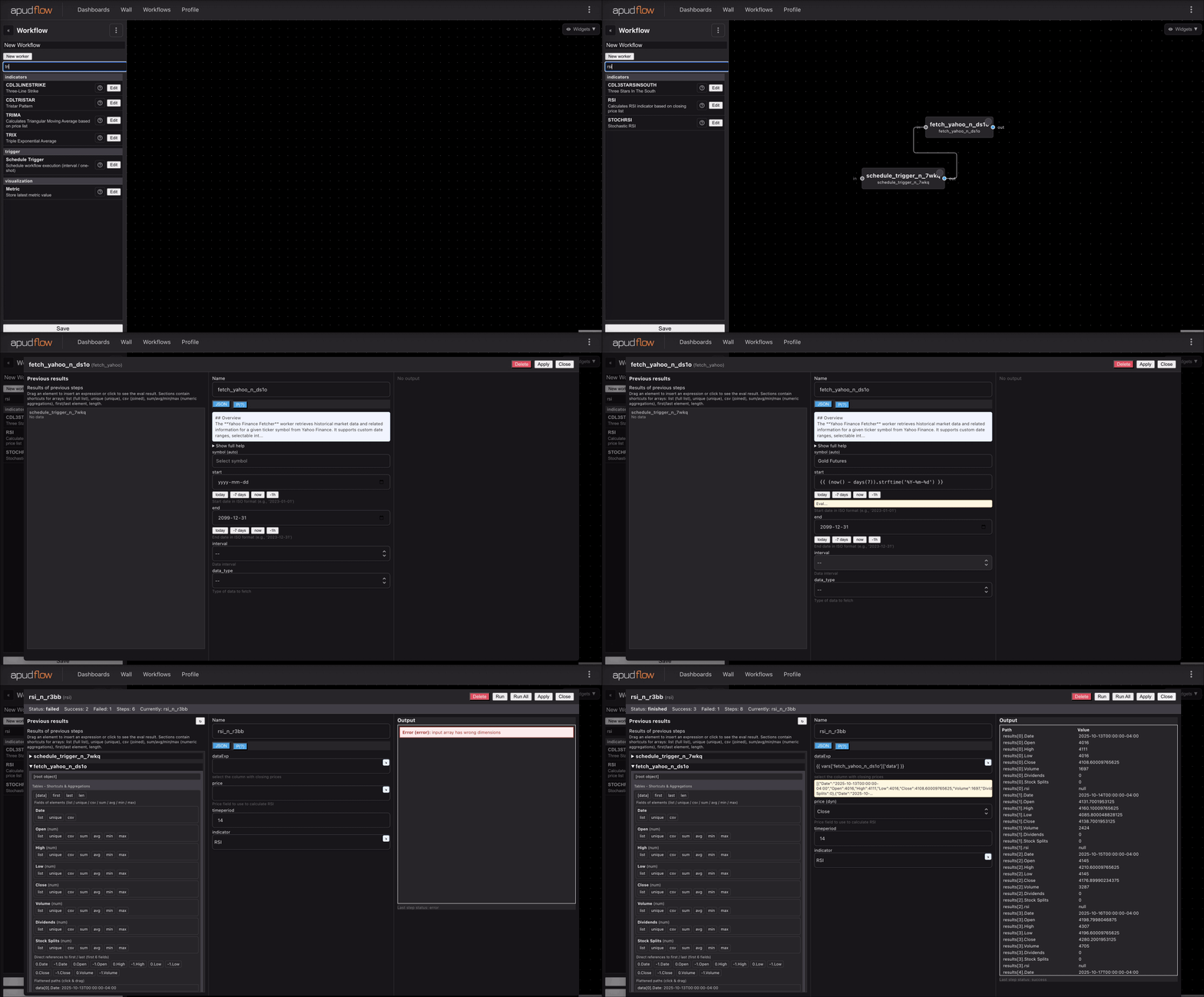
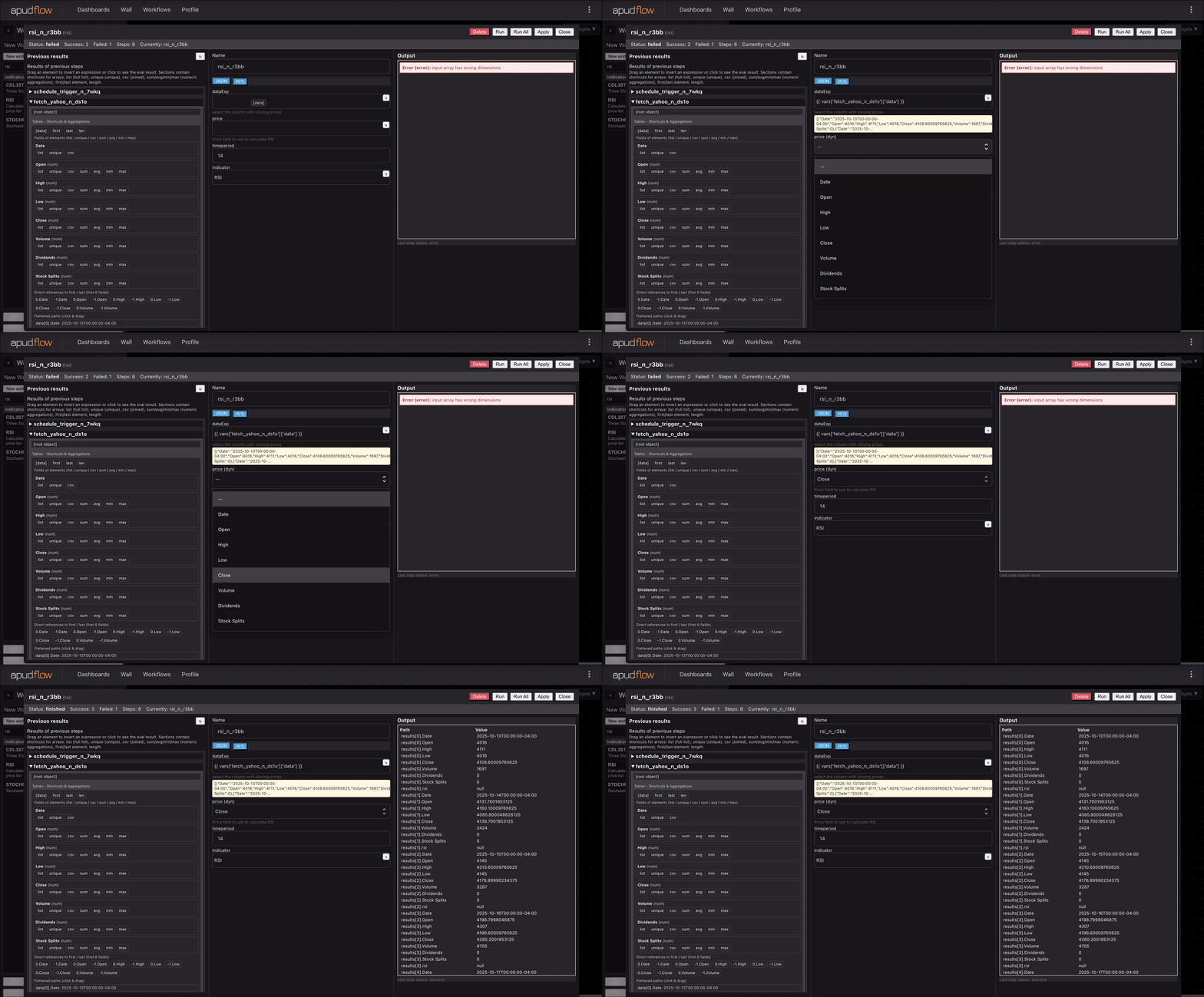
These images demonstrate how to apply the PLUS_DI indicator to a chart and interpret the results.