KAMA
Type:
kama• Category:indicators
Description
Calculates KAMA Exponential Moving Average based on price list
Parameters
| Name | Type | Description | Required | Default |
|---|---|---|---|---|
dataExp | string | prices data | no | |
price | string | Price field to use to calculate KAMA | no | |
timeperiod | number | Number of periods to use for KAMA calculation | no | 30 |
indicator | string | no | "KAMA" |
Help
KAMA
Description
The KAMA (Kaufman's Adaptive Moving Average) indicator is a technical analysis tool used in financial markets to gauge the direction and strength of price movements. It adapts to market conditions, providing a more responsive average when prices change rapidly and a slower average when prices move steadily.
What does this worker do?
This worker calculates the KAMA (Kaufman's Adaptive Moving Average) based on a provided price list. It takes into account the variability of the market and adjusts its sensitivity to price movements, making it a versatile tool for traders and analysts.
How to Interpret the Results
The KAMA indicator can be used in several ways:
- Trend Identification: When the price is above the KAMA line, it indicates an uptrend. Conversely, when the price is below the KAMA line, it suggests a downtrend.
- Signal Generation: Crossovers between the price and the KAMA line can be used as buy or sell signals. A buy signal is generated when the price crosses above the KAMA line, and a sell signal is generated when the price crosses below the KAMA line.
- Volatility Adjustment: The KAMA's adaptive nature allows it to tighten up during periods of high volatility and widen out during periods of low volatility, making it a useful tool for setting stop-loss levels or determining position sizes.
Parameters
The KAMA worker accepts the following parameters:
dataExp: The price data used for the calculation.price: The specific price field within the data to use for the KAMA calculation (e.g., close, high, low).timeperiod: The number of periods to use in the KAMA calculation. This influences the indicator's sensitivity to price movements.indicator: [No description provided]
Usage Example
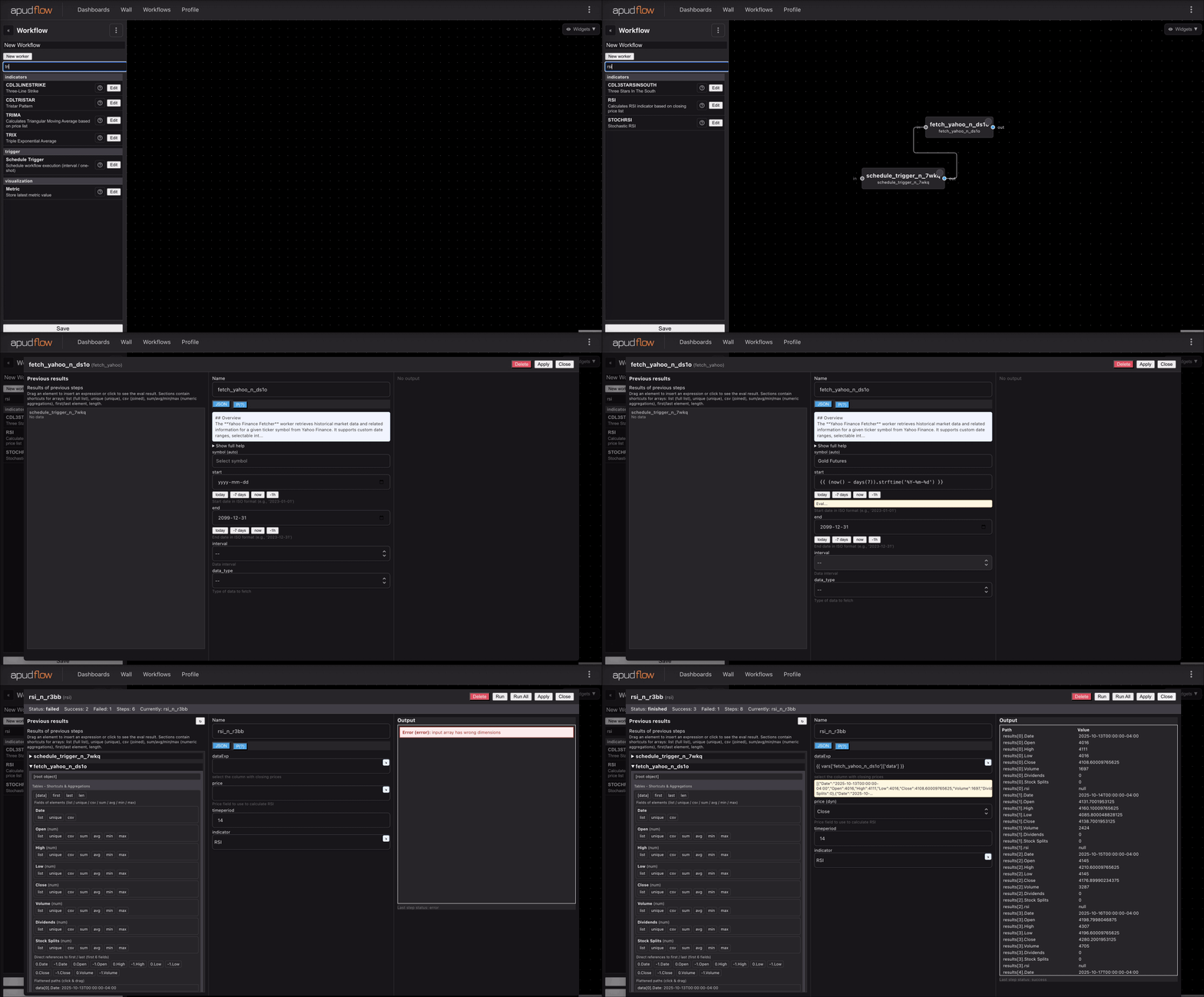
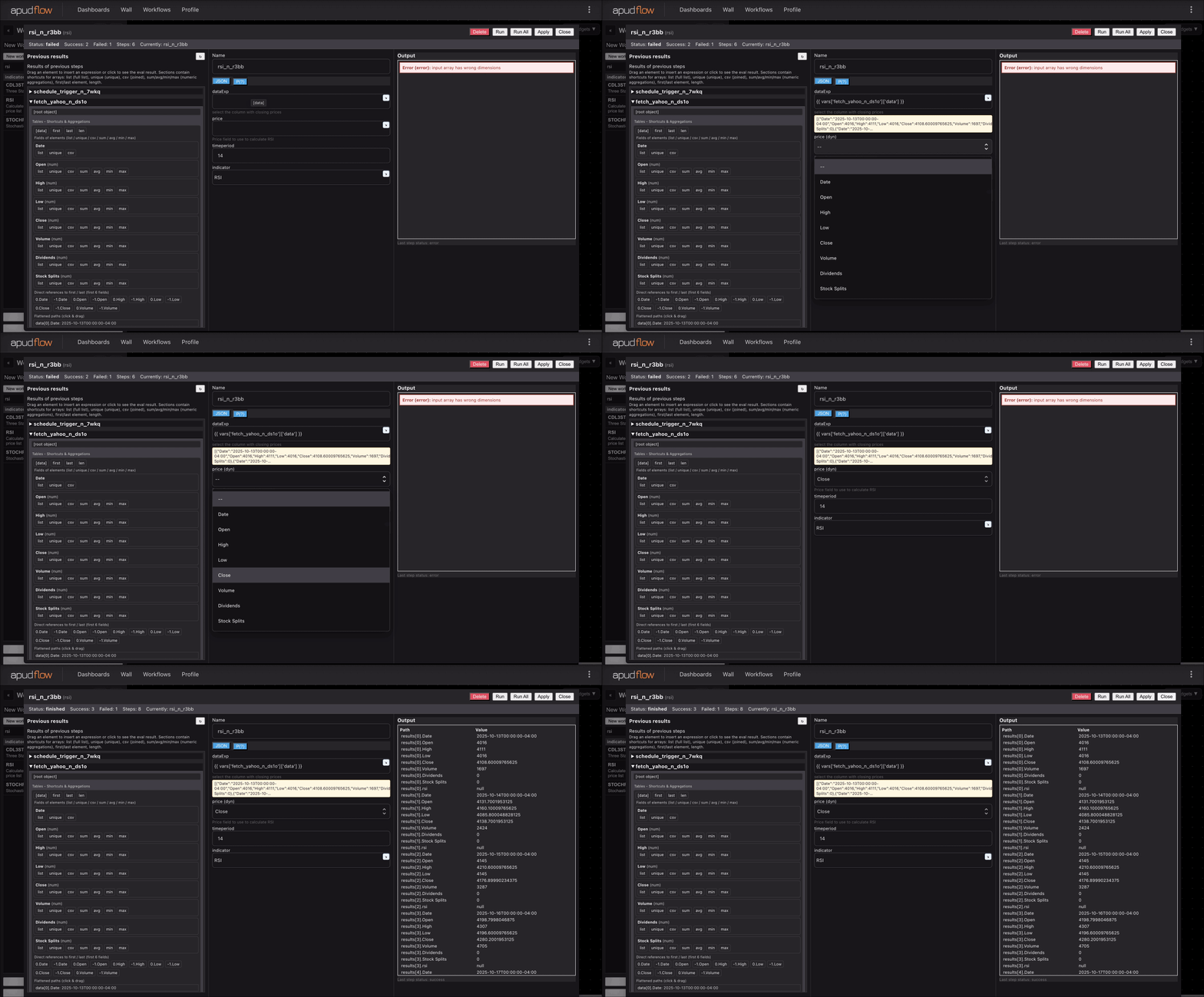
To get a better understanding of how to use the KAMA indicator, you can refer to the following GIFs:
Full Usage Example
Short Usage Example
Additional Information
The KAMA was developed by Perry Kaufman and introduced in his 1995 book, "Smarter Trading." It's based on the concept of efficiency, which measures how much of the price movement is due to noise versus real directional movement. By adapting to market conditions, the KAMA aims to filter out noise and provide a clearer picture of the underlying trend.