SUM
Type:
sum• Category:indicators
Description
Summation
Parameters
| Name | Type | Description | Required | Default |
|---|---|---|---|---|
dataExp | string | prices data | no | |
real | string | Data column to apply the calculation to (e.g., closing price) | no | |
timeperiod | number | Number of periods | no | 30 |
Help
SUM Indicator
Description
The SUM indicator is a simple yet powerful tool used in financial analysis to calculate the summation of a specified data column over a given time period. This worker is designed to provide users with a straightforward way to compute the sum of values, such as closing prices, over a defined number of periods.
What does this worker do?
The SUM worker takes in three primary parameters:
dataExp: The prices data to be used for the calculation.real: The specific data column to apply the calculation to (e.g., closing price).timeperiod: The number of periods over which the summation is calculated.
How to interpret the results
The result of the SUM worker is the total sum of the specified data column over the given time period. This value can be used to identify trends, patterns, or anomalies in the data. For example, a rising sum of closing prices over a certain period may indicate an upward trend in the market.
Usage
To use the SUM worker, simply provide the required parameters:
dataExp: Your prices datareal: The data column to calculate the sum for (e.g., closing price)timeperiod: The number of periods to consider
Visual Guide
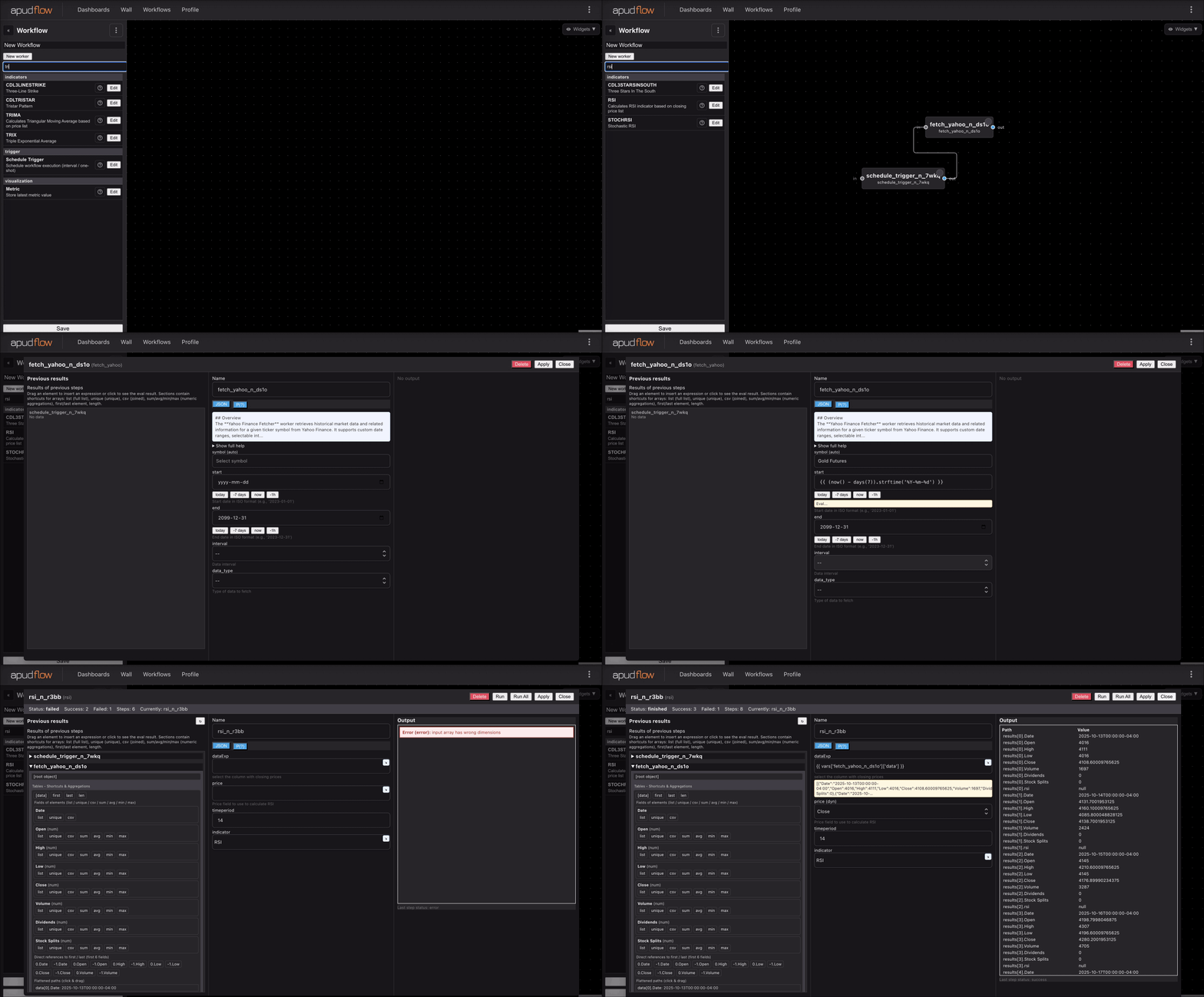
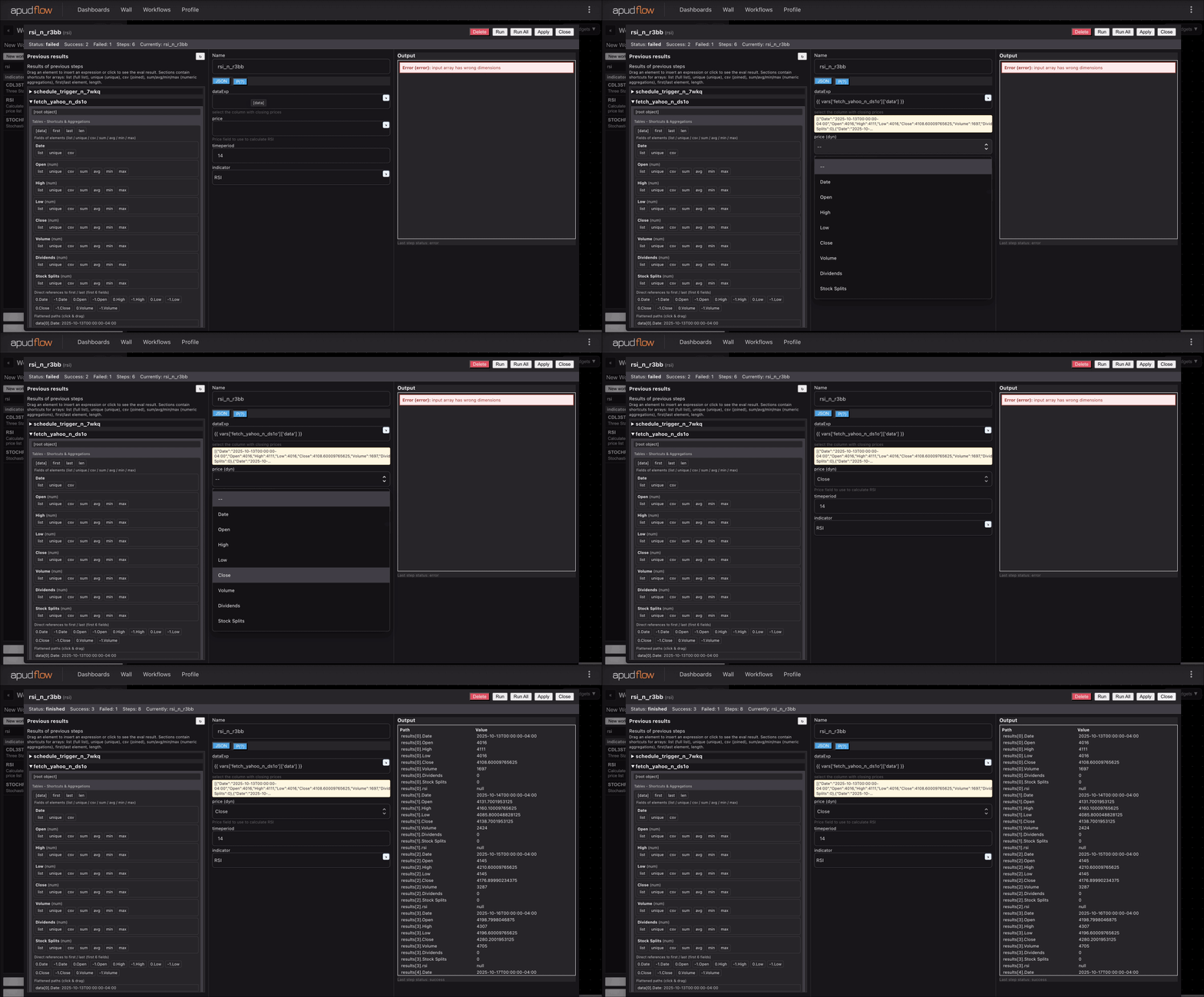
For a step-by-step visual guide on how to use the SUM worker, please refer to the following GIFs:
Full GIF
[](https://pub-6c7cc7f707d94ca98153d59a039b9a3d.r2.dev/indicator_full.gif)
Short GIF
[](https://pub-6c7cc7f707d94ca98153d59a039b9a3d.r2.dev/indicator_short.gif)
Additional Knowledge
The SUM indicator is a basic yet essential tool in technical analysis. It can be used in various ways, such as:
- Identifying trends: A rising sum of prices over time may indicate an upward trend.
- Detecting anomalies: A sudden spike or drop in the sum of prices may indicate an unusual market event.
- Confirming patterns: The SUM indicator can be used to confirm patterns, such as a breakout or a reversal.
By incorporating the SUM worker into your financial analysis toolkit, you can gain valuable insights into market trends and make more informed investment decisions.