SAREXT
Type:
sarext• Category:indicators
Description
Calculates extended SAR indicator based on high and low prices
Parameters
| Name | Type | Description | Required | Default |
|---|---|---|---|---|
dataExp | string | prices data | no | |
high | string | select the column with highest prices | no | |
low | string | select the column with lowest prices | no | |
startvalue | number | Starting value for SAREXT | no | 0 |
offsetonreverse | number | Offset on reverse for SAREXT | no | 0 |
accelerationinitlong | number | Initial acceleration for long positions | no | 0 |
accelerationlong | number | Acceleration for long positions | no | 0 |
accelerationmaxlong | number | Maximum acceleration for long positions | no | 0 |
accelerationinitshort | number | Initial acceleration for short positions | no | 0 |
accelerationshort | number | Acceleration for short positions | no | 0 |
accelerationmaxshort | number | Maximum acceleration for short positions | no | 0 |
Help
SAREXT
Description
The SAREXT worker is an indicator used in financial analysis to calculate the extended Stop and Reverse (SAR) indicator based on high and low prices. This indicator is used to determine the trend direction and potential reversal points.
Overview
The SAREXT worker takes in a set of parameters, including prices data, and outputs the extended SAR indicator values. The indicator is calculated based on the high and low prices of a financial instrument, and is used to identify potential trend reversals.
What does this worker do?
The SAREXT worker calculates the extended SAR indicator values based on the provided parameters. The indicator is a trend-following indicator that uses a set of rules to determine the trend direction and potential reversal points.
How to interpret the results
The SAREXT indicator can be interpreted as follows:
- When the indicator is above the price, it indicates a downtrend.
- When the indicator is below the price, it indicates an uptrend.
- When the indicator crosses above or below the price, it indicates a potential trend reversal.
Parameters
The SAREXT worker takes in the following parameters:
dataExp: prices datahigh: select the column with highest priceslow: select the column with lowest pricesstartvalue: Starting value for SAREXToffsetonreverse: Offset on reverse for SAREXTaccelerationinitlong: Initial acceleration for long positionsaccelerationlong: Acceleration for long positionsaccelerationmaxlong: Maximum acceleration for long positionsaccelerationinitshort: Initial acceleration for short positionsaccelerationshort: Acceleration for short positionsaccelerationmaxshort: Maximum acceleration for short positions
Usage
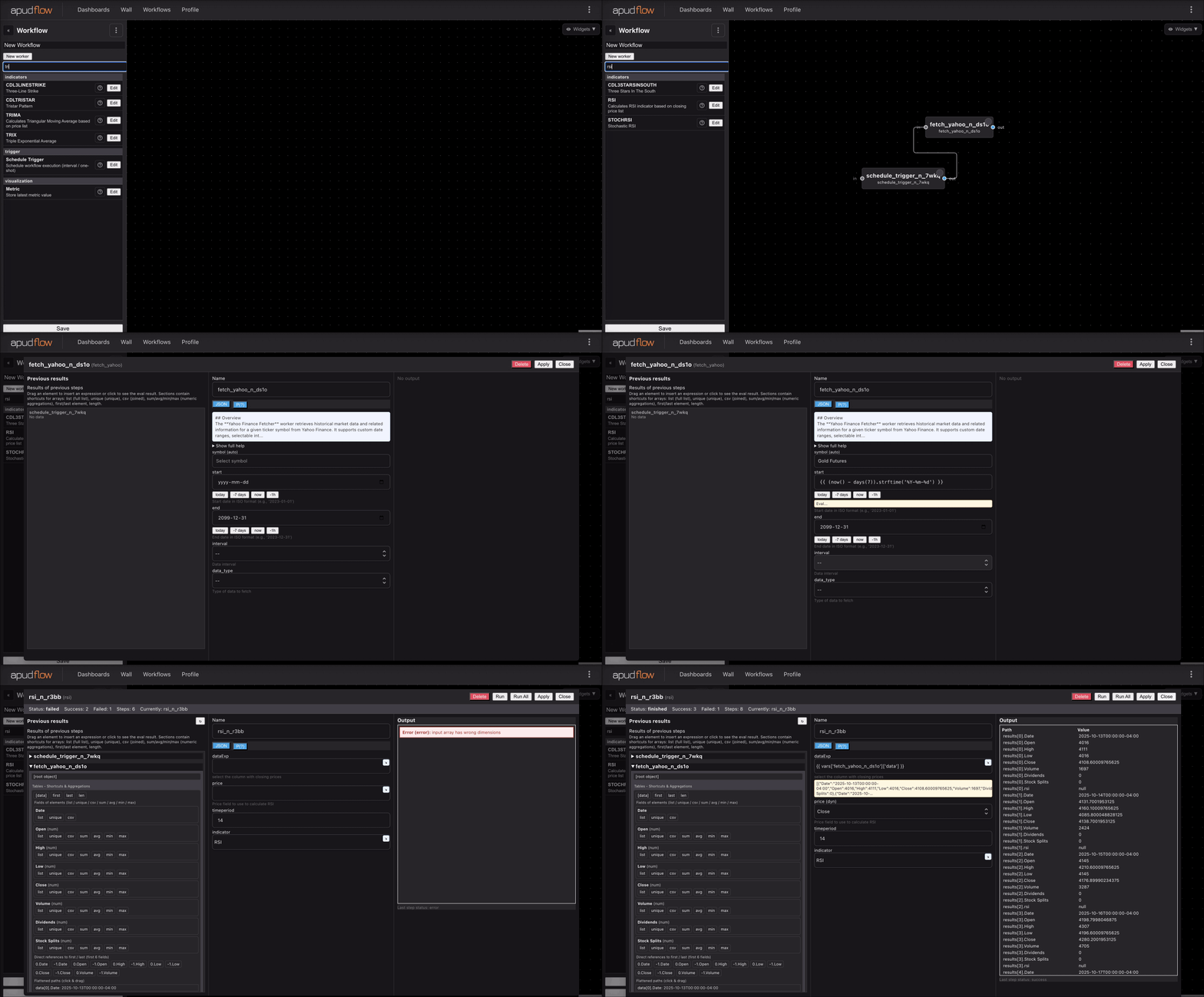
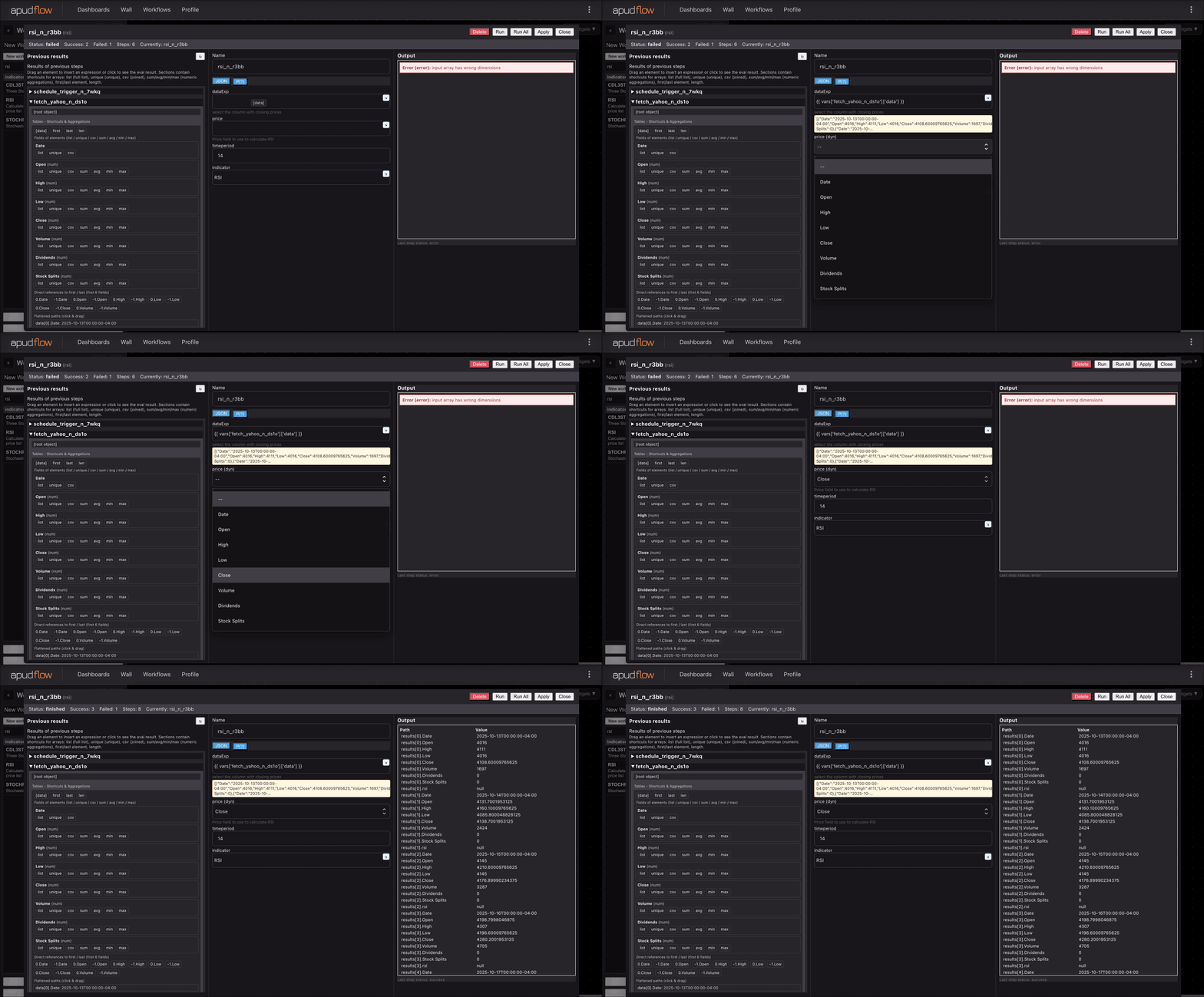
To use the SAREXT worker, simply provide the required parameters and the worker will output the extended SAR indicator values.
Example Usage
An example of how to use the SAREXT worker can be seen in the following GIFs:
Full Example
[](https://pub-6c7cc7f707d94ca98153d59a039b9a3d.r2.dev/indicator_full.gif)
Short Example
[](https://pub-6c7cc7f707d94ca98153d59a039b9a3d.r2.dev/indicator_short.gif)
Knowledge about the Indicator
The SAREXT indicator is a variation of the traditional Stop and Reverse (SAR) indicator. The SAR indicator was developed by J. Welles Wilder and is used to determine the trend direction and potential reversal points. The SAREXT indicator is an extended version of the SAR indicator that uses a set of rules to determine the trend direction and potential reversal points.
The SAREXT indicator is a trend-following indicator that uses a set of parameters to determine the trend direction and potential reversal points. The indicator is sensitive to the parameters used and can produce different results based on the input parameters.
It is recommended to use the SAREXT indicator in conjunction with other technical indicators and analysis tools to confirm trading decisions.