MACD
Type:
macd• Category:indicators
Description
Calculates MACD indicator based on closing price list
Parameters
| Name | Type | Description | Required | Default |
|---|---|---|---|---|
dataExp | string | select the column with closing prices | no | |
price | string | Price field to use to calculate MACD | no | |
fastperiod | number | Number of periods for the fast EMA | no | 12 |
slowperiod | number | Number of periods for the slow EMA | no | 26 |
signalperiod | number | Number of periods for the signal line | no | 9 |
Help
MACD Indicator Worker
=====================================
Description
The MACD (Moving Average Convergence Divergence) indicator worker is a financial analysis tool used to identify trends and predict potential buy and sell signals. This worker calculates the MACD indicator based on a list of closing prices.
What does this worker do?
The MACD worker takes in a column of closing prices and calculates three main components:
- MACD Line: The difference between two exponential moving averages (fast and slow) of the closing prices.
- Signal Line: A moving average of the MACD line.
- Histogram: The difference between the MACD line and the signal line.
How to interpret the results
The MACD indicator can be interpreted in several ways:
- Crossovers: When the MACD line crosses above the signal line, it's a bullish signal (buy). When the MACD line crosses below the signal line, it's a bearish signal (sell).
- Divergences: When the MACD line and the price chart show different trends, it can indicate a potential reversal.
- Histogram: A growing histogram indicates increasing momentum, while a shrinking histogram indicates decreasing momentum.
Parameters
The MACD worker accepts the following parameters:
- dataExp: Select the column with closing prices.
- price: Price field to use to calculate MACD.
- fastperiod: Number of periods for the fast EMA (default is 12).
- slowperiod: Number of periods for the slow EMA (default is 26).
- signalperiod: Number of periods for the signal line (default is 9).
Usage
To use the MACD worker, simply provide the required parameters and a list of closing prices. The worker will output the MACD line, signal line, and histogram.
Example Use Cases
- Trend identification: Use the MACD worker to identify trends in a stock's closing prices.
- Buy and sell signals: Use the MACD worker to generate buy and sell signals based on crossovers and divergences.
Visualizing the MACD Indicator
For a visual representation of how to use the MACD worker, refer to the following GIFs:
Full GIF
[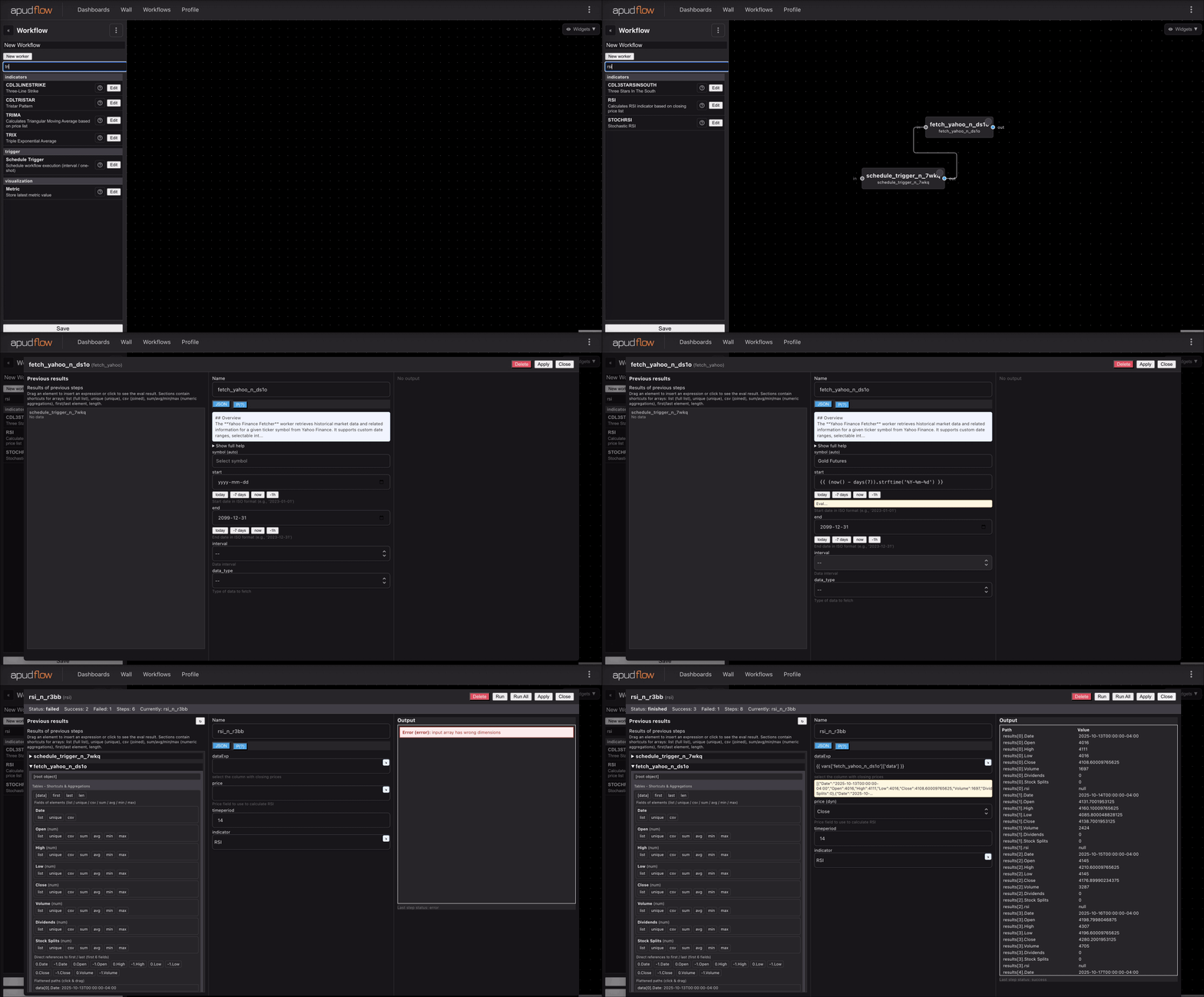](https://pub-6c7cc7f707d94ca98153d59a039b9a3d.r2.dev/indicator_full.gif)
Short GIF
[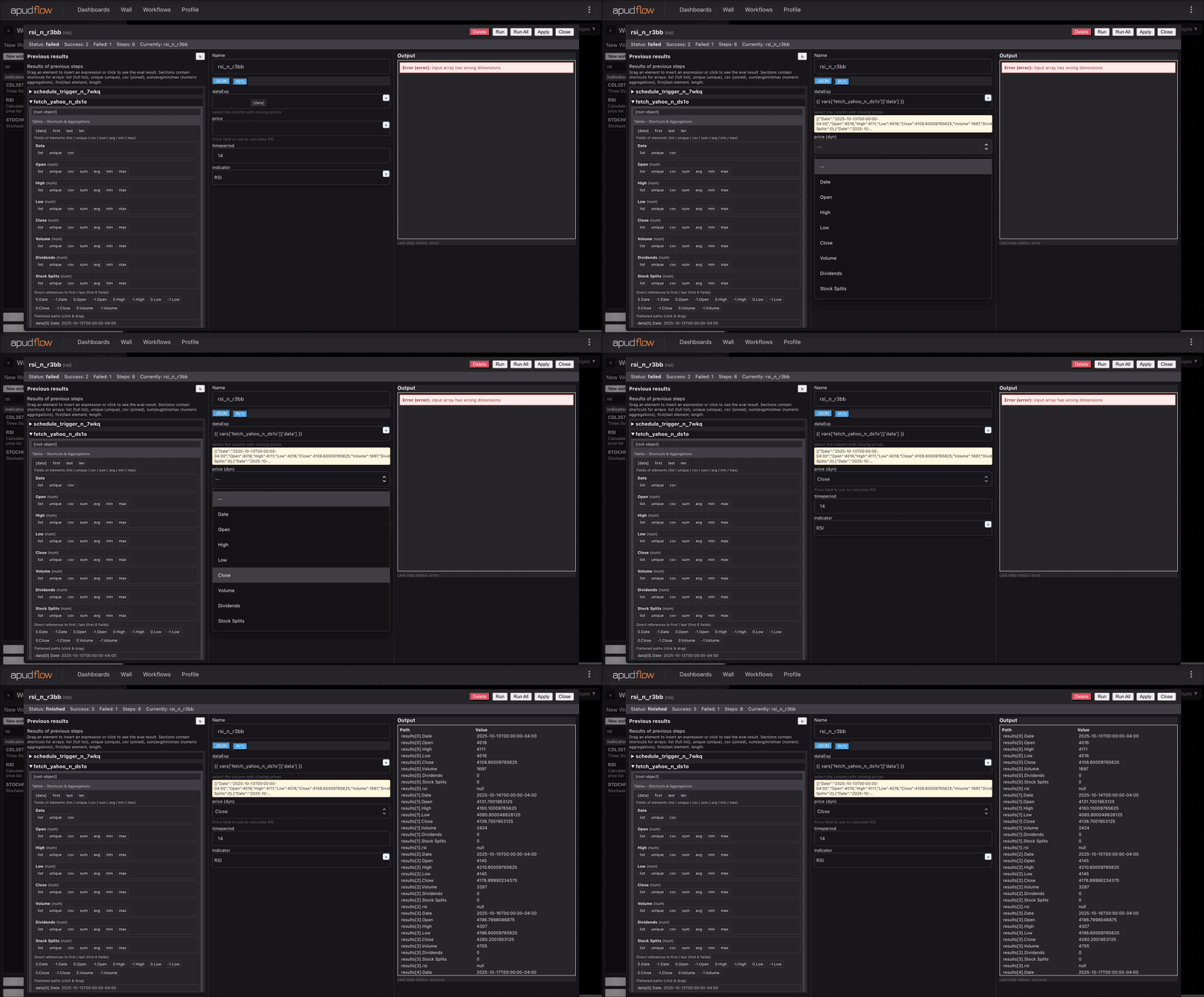](https://pub-6c7cc7f707d94ca98153d59a039b9a3d.r2.dev/indicator_short.gif)
Additional Information
The MACD indicator was developed by Gerald Appel in the 1970s. It's a popular technical analysis tool used to identify trends, predict potential buy and sell signals, and gauge momentum. The MACD indicator can be used in various markets, including stocks, forex, and cryptocurrencies.