STOCHF
Type:
stochf• Category:indicators
Description
Stochastic Fast
Parameters
| Name | Type | Description | Required | Default |
|---|---|---|---|---|
dataExp | string | data with prices | no | |
high | string | select the column with highest prices | no | |
low | string | select the column with lowest prices | no | |
close | string | select the column with closing prices | no | |
fastk_period | number | Fast %K period | no | 5 |
fastd_period | number | Fast %D period | no | 3 |
fastd_matype | number | Fast %D MA type | no | 0 |
Help
STOCHF
Stochastic Fast
The Stochastic Fast (STOCHF) indicator is a momentum indicator used in financial analysis to gauge the closing price of a security relative to its price range over a given period of time. This indicator is particularly useful for identifying overbought and oversold conditions in the market.
Description
The STOCHF indicator calculates two lines: the Fast %K line and the Fast %D line. The Fast %K line reflects the current market price position relative to the market's range over a specified period. The Fast %D line is a moving average of the Fast %K line.
The STOCHF indicator is computed using the following formula:
- Fast %K = ((Current Close - Lowest Low) / (Highest High - Lowest Low)) * 100
- Fast %D = Moving Average of Fast %K over a specified period
What does this worker do?
The STOCHF worker calculates the Stochastic Fast indicator for a given dataset. It takes the following parameters:
dataExp: The input data with prices.high: The column name for the highest prices.low: The column name for the lowest prices.close: The column name for the closing prices.fastk_period: The period for the Fast %K line.fastd_period: The period for the Fast %D line.fastd_matype: The moving average type for the Fast %D line.
How to interpret the results
The STOCHF indicator can be interpreted in the following ways:
- Overbought: When the Fast %K line crosses above 80, it indicates that the market is overbought, suggesting a potential sell signal.
- Oversold: When the Fast %K line crosses below 20, it indicates that the market is oversold, suggesting a potential buy signal.
- Bullish Divergence: When the Fast %K line and the price chart form a bullish divergence (i.e., the Fast %K line makes a higher low while the price chart makes a lower low), it can be a buy signal.
- Bearish Divergence: When the Fast %K line and the price chart form a bearish divergence (i.e., the Fast %K line makes a lower high while the price chart makes a higher high), it can be a sell signal.
Usage
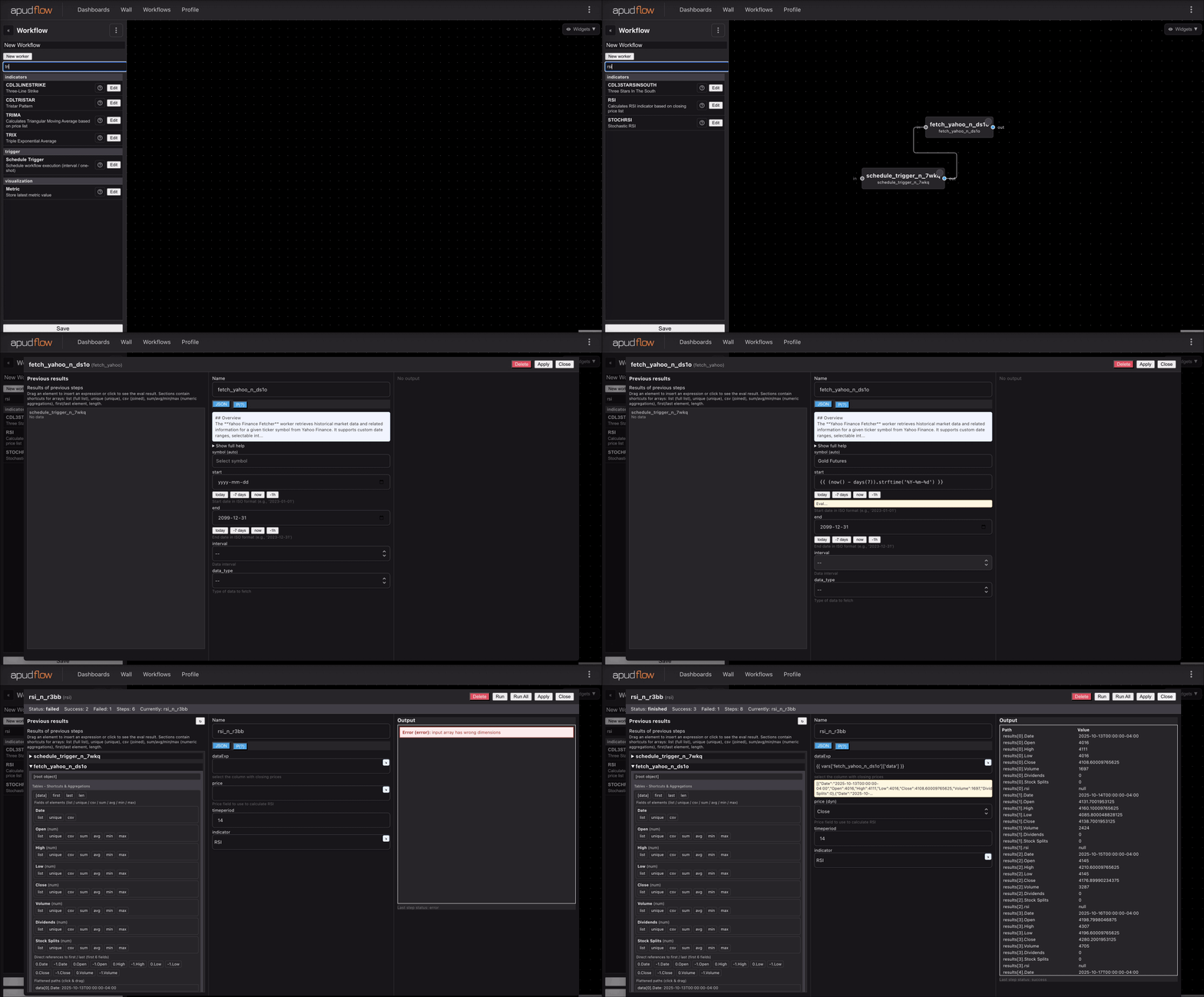
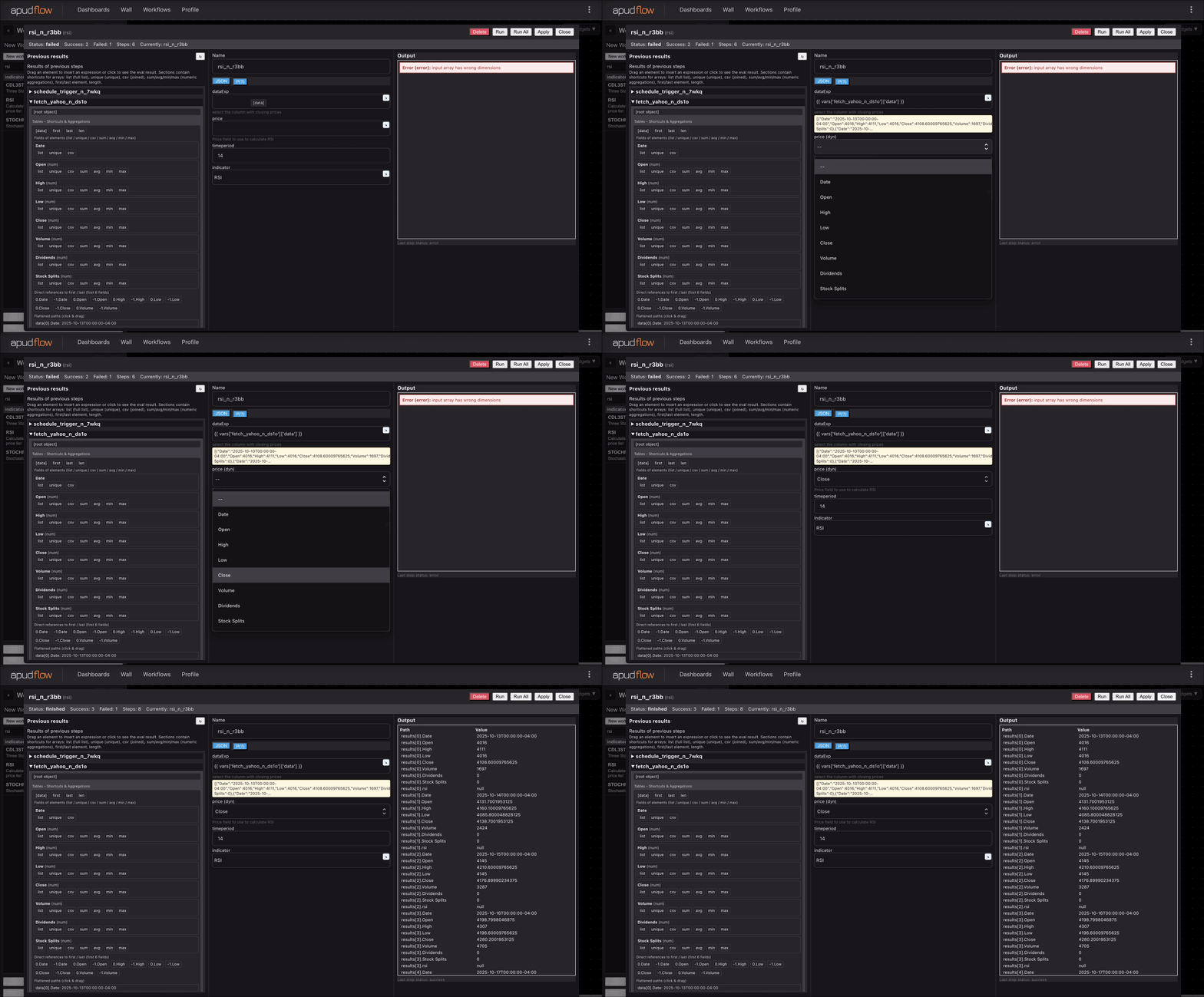
To use the STOCHF indicator, simply provide the required parameters and the worker will calculate the Fast %K and Fast %D lines.
Visualizing the Indicator
For a visual representation of how to use the STOCHF indicator, refer to the following images:
Full View
[](https://pub-6c7cc7f707d94ca98153d59a039b9a3d.r2.dev/indicator_full.gif)
Short View
[](https://pub-6c7cc7f707d94ca98153d59a039b9a3d.r2.dev/indicator_short.gif)
Additional Knowledge
The STOCHF indicator was developed by George Lane, a renowned technical analyst. It is essential to use the STOCHF indicator in conjunction with other technical and fundamental analysis tools to form a comprehensive view of the market. Additionally, the indicator's parameters can be adjusted to suit different market conditions and trading strategies.